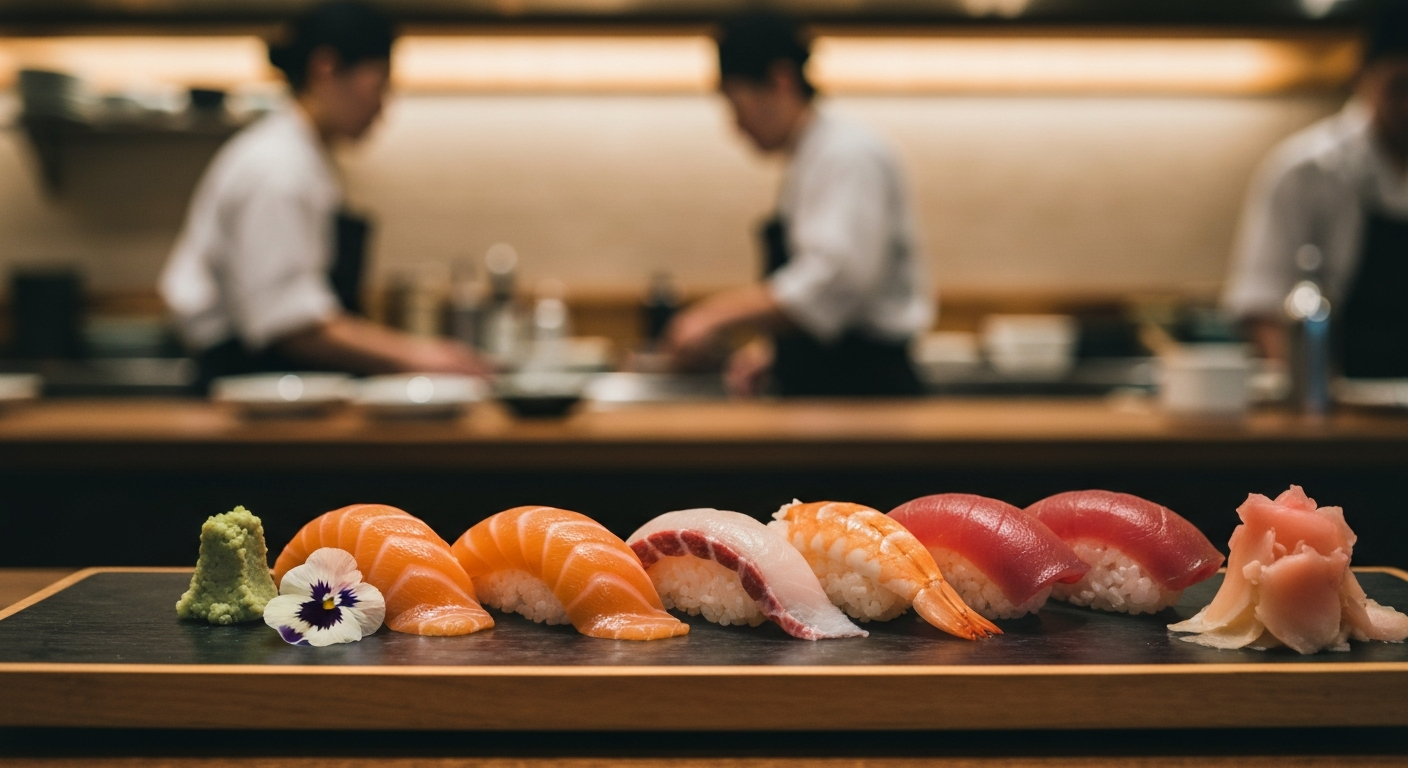
Search “best Japanese restaurant in Manila” and you’ll get hundreds of results. The problem: many of them are Japanese-inspired rather than Japanese-authentic — menus adjusted for local palates, sushi rolls that would raise eyebrows in Tokyo, or “omakase” that’s really just a fixed set menu with no real chef’s discretion involved.
That’s not necessarily a bad thing. But if you’re an expat missing the flavors of home, a Filipino food lover curious about what Japanese food actually tastes like in Japan, or someone entertaining Japanese business partners who’ll notice the difference immediately — you need a different kind of list.
This guide is built from restaurants that Japanese residents and frequent visitors to Manila actually choose for themselves: places verified by cuisine type, ingredient sourcing, technique, and atmosphere, not just star ratings. Each entry includes practical details expats and first-time visitors usually want — average cost, how to book, and what to expect walking in.
Who this guide is for
- Expats living in Manila who want restaurants that taste like “home”
- Filipino food lovers who want to understand what makes a Japanese restaurant genuinely authentic, not just Instagram-pretty
- Anyone hosting Japanese clients, colleagues, or guests and wanting the choice to land well
- Travelers who want one or two truly excellent Japanese meals during a short Manila trip
Before you book: 5 signals of an authentic Japanese restaurant
Since “authenticity” is hard to judge from a menu photo alone, here’s what locals actually look for:
- A visible Japanese customer base. If a restaurant is genuinely popular with the Japanese community, that’s the single strongest signal — Japanese diners are famously particular about their own cuisine.
- A Japanese head chef or owner. Not a requirement, but restaurants led by a Japanese chef tend to hold closer to traditional technique and seasoning.
- Ingredients flown in from Japan. Many top-tier spots advertise this directly (seafood, wagyu, seasonings). It’s a real cost driver and usually reflected in the price.
- A menu that isn’t over-adapted. If every roll is deep-fried and mayo-drizzled, that’s a signal the kitchen is optimizing for local taste rather than tradition — which is fine, just worth knowing going in.
- Reservations are taken seriously. Genuinely high-quality Japanese kitchens tend to run tighter reservation systems, because portioning and prep are done to order, not stockpiled.
Quick-pick table by occasion
Prices are a rough per-person average; final bills vary with drinks and course choice.
| Occasion | Restaurant | Japanese Name | Avg. price/person |
|---|---|---|---|
| Special occasion, can’t afford to get it wrong | Kyo-to | 京兎 | ₱8,500+ |
| Premium sushi and sashimi | Tsukiji Restaurant | 築地 | ₱3,000–5,000+ |
| Well-rounded sushi, sashimi, hot pot | Tsumura Sushi Bar and Restaurant | つむら | ₱1,500–2,000 |
| Kyushu-style izakaya, after-work drinks | Izakaya Terra | 居酒屋 照 | ₱2,000–4,000 |
| Chef’s-choice creative Japanese | Fukudaya Japanese Dining | 福田屋 | ₱1,500–2,500 |
| Casual, community favorite | Kawasaki Restaurant | 川崎 | ₱1,000–2,500 |
| Yakitori-focused meal | Ikoka Yakitori | 焼き鳥 いこか | ₱1,000 – 2,500 |
| Late-night second round | Fukumimi | 福みみ | ₱1,000–1,500 |
| Solo dining, counter seat | Kappou Nakaji | 割烹 なかじ | ₱1,500–2,500 |
| Home-style food, free-flowing drinks | Furinkazan | 風林火山 | ₱1,000–4,000 |
1. Kyo-to (京兎) — Reservation-only kaiseki, for the night you can’t afford to mess up
A reservations-only kaiseki restaurant in Legazpi Village, Makati. Kaiseki is a multi-course Japanese dining tradition where every dish, plate, and pause between courses is deliberately composed — not a set menu so much as a choreographed experience. Chef Ryohei Kawamoto leads the kitchen; some outlets report he previously cooked for a former Japanese ambassador.
Good to know: The restaurant’s interior was reportedly designed by a Japanese hospitality design studio, built around a lattice-gate entrance and a corridor layout meant to echo the quiet formality of a tea room. One resident’s blog review put the total per-person cost, including drinks, at around ₱8,500.
Book ahead. This is not a walk-in restaurant, especially on weekends or around holidays — reach out via Facebook Messenger or Instagram at least a few days in advance.
Good for: client entertaining, anniversaries, or introducing visiting family to what Japanese fine dining actually looks like.
| Info | Details |
|---|---|
| Cuisine | Kaiseki / chef’s choice |
| Area | Makati, Legazpi Village |
| Address | G/F Coyiuto House, 119 Don Carlos Palanca Street, Legazpi Village, Makati |
| Hours | Tue–Sun 5:00 PM–10:00 PM (closed Mondays) |
| Avg. price | ~₱8,500/person |
| Phone | +63 917 596 9697 |
| @kyo.toph |
Also covered by: Philippine Primer
2. Izakaya Terra (居酒屋 照) — Kyushu flavors, brought straight from the source
An izakaya rooted in Fukuoka, Kyushu-style cooking, with sweet soy sauce and yuzu kosho reportedly sourced directly from Kyushu. Sashimi and slow-simmered dishes are the highlights — the Terra Gomaburi (yellowtail sashimi with sesame sauce) is a standout.
Good to know: Kyushu cooking tends to be sweeter and gentler than Tokyo-style seasoning, which surprises even Japanese diners from other regions. If you’ve only had Tokyo-style Japanese food, this is a genuinely different flavor profile worth trying.
Good for: after-work drinks, small group dinners, anyone who wants a regional Japanese flavor most Manila restaurants don’t offer.
| Info | Details |
|---|---|
| Cuisine | Kyushu izakaya |
| Area | Makati, Legazpi Village |
| Address | Unit C09 & C10, The Grand Midori, Bolanos Street, Legazpi Village, Makati |
| Hours | 5:00 PM–11:00 PM |
| Avg. price | ~₱2,000–4,000/person |
| @terra.philippine |
Also covered by: Philippine Primer
3. Fukudaya (福田屋) — Chef’s-choice dining that changes with the market
Tucked into a quiet corner of Arya Residences in BGC, Fukudaya blends traditional Japanese technique with local and imported ingredients. It’s known for taking on off-menu requests and building courses around whatever’s freshest that day.
Good to know: Because the omakase-style menu shifts with what’s available, no two visits are quite the same — this is a restaurant that rewards repeat visits rather than a one-and-done stop.
Good for: business dinners, small private gatherings, and anyone who’s tired of the “usual” sushi-and-yakitori rotation.
| Info | Details |
|---|---|
| Cuisine | Sushi / Izakaya /Sashimi / Creative Japanese |
| Area | BGC, Taguig |
| Address | Unit 7, The Plaza, Arya Residences, McKinley Parkway, BGC |
| Phone | +63 927 264 0171 / +63 998 805 6859 |
| Avg. price | ~₱1,500–2,500/person |
| Website | fukudaya.ph |
| @fukudaya.ph |
Also covered by: The Food Scout
4. Kawasaki Restaurant (川崎) — The community’s living room
Kawasaki is less a “restaurant to impress” and more a “restaurant to belong to.” Located in Pio del Pilar, Makati, it’s known within Manila’s Japanese community for sashimi, gyoza, crab salad, and a sushi menu that punches above its casual setting.
Good to know: The restaurant is literally named after its owner — a longtime figure in Manila’s Japanese community, known for a passion for scuba diving that occasionally closes the restaurant around New Year’s. One Japanese-language review described it as “a gathering place for regulars,” which sums up the vibe well. Because it’s in a quieter residential pocket of Makati rather than a mall or a main commercial strip, most diners arrive by Grab or taxi rather than walking — standard practice for most Manila neighborhoods after dark, not a red flag specific to this restaurant.
Good for: casual weeknight dinners, mixed groups with different tastes, and anyone who wants a “regulars’ spot” rather than a special-occasion venue.
| Info | Details |
|---|---|
| Cuisine | Izakaya, sushi, sashimi / Izakaya |
| Area | Makati, Pio del Pilar |
| Address | 7563 Santillian Street, Barangay Pio del Pilar, Makati |
| Hours | ~5:00 PM–11:00 PM |
| Phone | +63 917 872 1022 / +63 917 185 1022 |
| Avg. price | ₱1,000–1,500/person |
Also covered by: Philippine Primer / NaviManila
5. Tsukiji Restaurant (築地) — Manila’s benchmark for high-end Japanese
Open since 1989, Tsukiji is one of the oldest and most established high-end Japanese restaurants in Metro Manila, named after Tokyo’s famous fish market. Seafood and Ohmi wagyu are flown in from Japan roughly five times a week, and the menu spans sushi, sashimi, sukiyaki, and shabu-shabu.
Good to know: Local reviewers sometimes call it the most expensive authentic Japanese restaurant in the Philippines — and it has the résumé to back it up, landing on Tatler Philippines’ Top 20 Restaurant list in both 2024 and 2025. If you’re choosing purely on ingredient quality and consistency, this is usually the first name that comes up.
Good for: VIP clients, family celebrations, or any meal where the ingredient quality needs to speak for itself.
| Info | Details |
|---|---|
| Cuisine | Sushi, sashimi, kaiseki, wagyu |
| Area | Makati |
| Address | 3rd Floor, Milky Way Building, 900 Arnaiz Avenue corner Paseo de Roxas, Makati |
| Hours | 11:00 AM–10:00 PM (per official site) |
| Phone | +63 2 8843 4285 / +63 2 8812 2913 |
| Avg. price | ₱3,000–5,000+/person (kaiseki course example: ₱9,900/person) |
| Website | tsukiji-restaurant.com |

Also covered by: Philippine Primer
6. Fukumimi (福みみ) — Late-night yakitori that stays open until 3 AM
A yakitori-focused izakaya in Poblacion, Makati, open from 5:00 PM until 3:00 AM — rare hours for a Japanese restaurant in Manila.
Good to know: Fukumimi isn’t a standalone shop — it’s part of KUURAKU GROUP, a Japanese restaurant company founded in 1999 with 18 locations across Tokyo and Chiba and outposts in Thailand, Indonesia, Canada, and India. Skewers are grilled by chefs holding a formal yakitori-grilling certification, over binchotan charcoal, using a house sauce recipe passed down within the company.
Good for: after-hours drinks, a second stop after dinner elsewhere, or anyone craving yakitori past midnight.
| Info | Details |
|---|---|
| Cuisine | Yakitori, izakaya |
| Area | Makati, Poblacion |
| Address | 2/F Kaija Building, 7836 Makati Avenue corner Valdez Street, Poblacion, Makati |
| Hours | 5:00 PM–3:00 AM |
| Phone | +63 915 507 4420 / +63 969 024 7893 |
| Avg. price | ₱1,000–1,500/person |
| @fukumimi_makati |
Also covered by: Philippine Primer
7. Ikoka Yakitori (焼き鳥 いこか) — Michelin-recognized grilling, straight from Osaka
Ikoka opened its first Philippine branch in BGC in September 2025, brought in by the Vikings Group. Its Osaka original earned a Michelin Bib Gourmand from 2022 to 2024 and a spot on Tabelog’s top 100 list — both meaningful credentials in Japan’s competitive dining scene. The menu runs 17 varieties of skewers, grilled over charcoal with a house sauce.
Good to know: Skewers run roughly ₱120–170 each, so it’s easy to build a meal à la carte. One thing that surprises Japanese diners: skewers here are generally served well-done rather than the medium doneness common in Japan, since local food-safety expectations differ.
Good for: a focused yakitori dinner, or bringing friends unfamiliar with Japanese grilling culture.
| Info | Details |
|---|---|
| Cuisine | Yakitori / Izakaya |
| Area | BGC, Taguig |
| Address | Ground Level, Two Maridien Building, Bonifacio South Street, 26th Avenue, BGC |
| Phone | +63 2 8845 4647 / +63 917 793 0888 |
| Avg. price | ₱1,000~2,500/person (skewer-focused meal) |
| @ikokayakitoribgc |
Also covered by: Philippine Primer / Spot.ph
8. Tsumura Sushi Bar and Restaurant (つむら) — From a 20-seat shop to Ayala Triangle
Tsumura relocated from Salcedo Village to a much larger space at The Shops at Ayala Triangle Gardens. Sushi and sashimi are the strongest draws, alongside seasonal items like ankimo (monkfish liver), grilled fish, hamachi kama, and sukiyaki.
Good to know: Master chef Masamichi Tsumura has over four decades of experience in sushi and sashimi. The restaurant’s growth — from a 20-seat neighborhood shop to a roughly 180-seat flagship — mirrors the broader growth of Manila’s Japanese dining scene over the past decade.
Good for: business lunches, and anyone who wants sushi plus hot-pot options in one visit.
| Info | Details |
|---|---|
| Cuisine | Sushi, sashimi, Japanese |
| Area | Makati, Ayala Triangle Gardens |
| Address | 3/F The Shops at Ayala Triangle Gardens, Makati Avenue, Makati |
| Phone | +63 2 8887 4848 |
| Avg. price | ₱1,500–2,000/person |
| Website | @tsumuraph |
Also covered by: Tatler Asia / Philippine Primer
9. Kappou Nakaji (割烹 なかじ) — Manila’s best-kept secret for solo diners
Tucked into the ground floor of Gervasia Hotel, Nakaji is a small kappou-style restaurant built around a counter, serving home-style Japanese dishes and drinking snacks. It reopened under new management in 2020 and can accommodate private groups of 15–20 by arrangement.
Good to know: Its hotel-lobby location means most tourists walk right past it — this is a spot that’s spread almost entirely by word of mouth within Manila’s Japanese community. If you want the rare experience of chatting with the chef across the counter mid-meal, this is one of the few places in Manila set up for exactly that.
Good for: solo dining, quiet catch-ups, and small private gatherings.
| Info | Details |
|---|---|
| Cuisine | Kappou, home-style Japanese |
| Area | Makati |
| Address | 152 Adelantado Street, Gervasia Hotel 1F, Makati |
| Avg. price | ~₱1,000–2,500/person |
| @kappou.nakaji |
Hours can vary — confirm via Instagram or LINE before visiting.
Also covered by: Philippine Primer
10. Furinkazan (風林火山) — Home cooking and all-you-can-drink
A relatively new restaurant in Salcedo Village serving obanzai — everyday Japanese home cooking — alongside set lunches and a free-flow dinner course. The signature dinner course pairs twelve home-style dishes and hot rice with unlimited drinks for ₱4,000/person; lighter options run ₱2,500 and ₱1,000.
Good to know: The restaurant’s name comes from a phrase associated with the 16th-century warlord Takeda Shingen, adapted from Sun Tzu’s Art of War: “swift as the wind, silent as the forest, fierce as fire, immovable as the mountain.” It’s an unusually literary name for what is, at heart, a comfort-food restaurant — a small signal that the owners take the craft seriously even while keeping the food unpretentious.
Good for: relaxed group dinners, all-you-can-drink nights, and anyone craving Japanese comfort food rather than a fine-dining experience.
| Info | Details |
|---|---|
| Cuisine | Obanzai, creative Japanese, izakaya |
| Area | Makati, Salcedo Village |
| Address | The Stratosphere Serviced Residences, 136 Valero Street, Salcedo Village, Makati City |
| Hours | 11:00 AM–2:00 PM (lunch sets from ₱700), 6:00 PM–11:00 PM |
| Avg. price | ₱1,000–4,000/person depending on course |
| @fuu_rin_ka.zan_mnl |
Also covered by: Philippine Primer
Comparison table
| Restaurant | Cuisine | Area | Avg. price/person | Best for |
|---|---|---|---|---|
| Kyo-to | Kaiseki | Makati | ₱8,500+ | Special occasions, entertaining |
| Izakaya Terra | Kyushu izakaya | Makati | ₱2,000–4,000 | After-work drinks |
| Fukudaya | Creative Japanese | BGC | ₱1,500–2,500 | Business dinners |
| Kawasaki | Izakaya, sushi | Makati | ₱1,000–2,500 | Casual, everyday meals |
| Tsukiji | Sushi, wagyu, kaiseki | Makati | ₱3,000–5,000+ | VIP guests, family occasions |
| Fukumimi | Yakitori | Makati | ₱1,000–1,500 | Late-night drinks |
| Ikoka | Yakitori | BGC | ₱1,000 – 2,500 | Focused yakitori meal |
| Tsumura | Sushi, sashimi | Makati | ₱1,500–2,000 | Business lunches |
| Nakaji | Kappou | Makati | ₱1,500–2,500 | Solo dining |
| Furinkazan | Obanzai, izakaya | Makati | ₱1,000–4,000 | Group dinners, free-flow drinks |
A practical guide to dining Japanese in Manila
If you’re new to Manila or new to Japanese dining etiquette, a few things are worth knowing before you book.
How reservations actually work here. Phone calls are increasingly rare — Facebook Messenger and Instagram DMs are the standard booking channel for most independent Japanese restaurants in Manila, including several on this list. Higher-end spots increasingly use OpenTable, and a few use LINE. When you message, include your party size, the date, and flag any dietary restrictions up front — it speeds things up considerably.
Tipping isn’t required. Most Japanese restaurants in Manila include a service charge in the bill, so tipping on top is appreciated but optional, not expected.
No-shows are taken seriously, especially at fine-dining spots. Kaiseki restaurants in particular prep ingredients to order for confirmed reservations. Some higher-end venues (like Ikoka’s private rooms) require a minimum consumable spend or deposit — ask when booking.
Halal and vegetarian options are limited. Given Manila’s significant Muslim population, this is a common question — but very few Japanese restaurants in the Philippines are halal-certified, and pork or non-halal dashi (stock) often appears even in dishes that look vegetarian. If this matters to you, message the restaurant directly before booking rather than assuming.
Some restaurants have tatami or shoes-off seating. It’s not universal in Manila the way it is in Japan, but a few of the more traditional spots (particularly kaiseki restaurants) do have low seating where shoes come off — worth knowing in advance if mobility or footwear is a concern.
Getting there safely at night is mostly about the neighborhood, not the restaurant. Areas like Poblacion and some residential pockets of Makati are best reached by Grab or taxi after dark, the same way you’d navigate most cities’ nightlife districts — this applies broadly across Manila, not to any one restaurant specifically.
FAQ
Which restaurant is hardest to get a reservation at? Kyo-to and Tsukiji Restaurant see the heaviest demand around anniversaries and holidays — book several days ahead if you can.
Where’s best for solo dining? Kappou Nakaji’s counter seating and Fukumimi’s late hours both work well if you’re eating alone.
Which restaurants suit a family dinner? Tsukiji and Tsumura both have private or semi-private seating suited to family groups.
What’s the best value for money? Ikoka’s per-skewer pricing and the casual izakaya menus at Kawasaki and Fukumimi all deliver genuinely authentic Japanese food starting around ₱1,000–1,500 per person.
Final thought
Manila has no shortage of restaurants calling themselves Japanese — the harder part is knowing which ones the Japanese community actually chooses for their own meals. Use the quick-pick table above to match a restaurant to your occasion, and bookmark this page for next time you’re deciding where to eat.
コメント